What actually happens in a Foundations course (and why it takes four sessions)
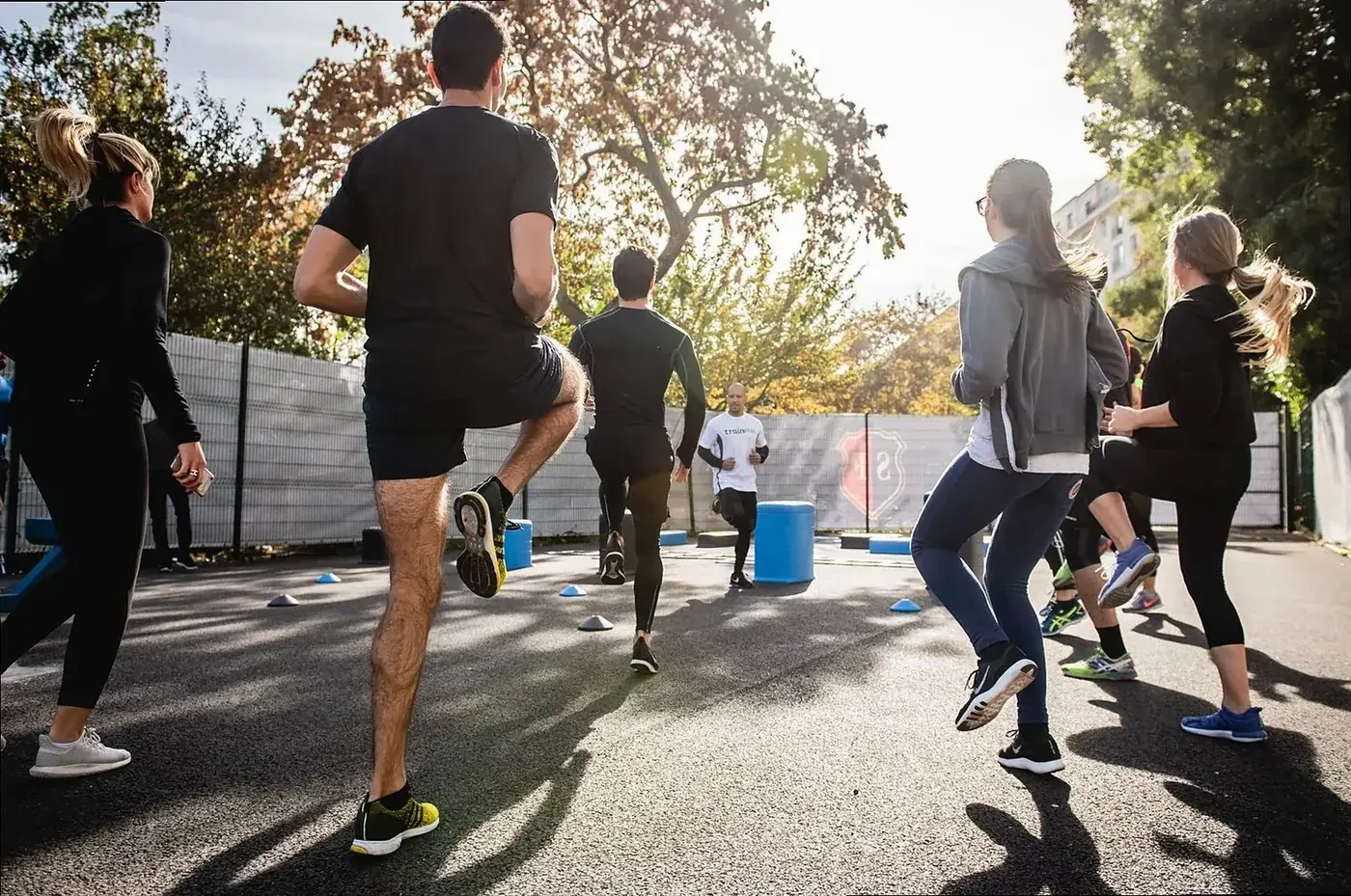
Most people who get hurt in their first month of lifting do not get hurt because they were unlucky or because barbells are inherently dangerous. They get hurt because someone handed them a programme, pointed them at a rack, and assumed that watching a few YouTube videos counted as instruction. I have seen this play out enough times at Grit Blend Zone to know the exact shape of the problem: a confident week, then a tweak, then a long, demoralising break that sends a promising beginner back to the couch. The Foundations course exists specifically to interrupt that sequence. It is four sessions long, and that length is not arbitrary — it reflects something real about how motor patterns form, how nervous systems adapt, and how trust between a coach and a new athlete gets built. What follows is as honest an account as I can give of what actually happens inside those four sessions.
The mistake that brings most people to us
The most common version of the story goes like this: someone decides, usually in January or after a life event that has made them newly serious about their body, that they want to lift weights. They join a commercial gym, they watch deadlift tutorials until they feel confident, and then they load a bar to something that feels appropriately challenging and pull. Sometimes nothing bad happens immediately. More often, within two or three weeks, something in the lower back or a shoulder starts talking to them in a way they cannot ignore. They rest, they return, it happens again. By the time they find their way to Grit Blend Zone, they are often carrying both a mild injury and a thicket of bad technique habits that the injury has made worse, because pain changes movement and changed movement reinforces itself.
What that self-directed path skips over is not the information — the information is genuinely everywhere — but the feedback loop. A coach watching you move can see things that no mirror and no camera angle fully captures: the way your hips shift right as you come off the floor, the breath you hold without realising you are holding it, the subtle forward lean that feels stable to you but is loading your spine in a way it was not designed to tolerate for long. The Foundations course is structured around making that feedback loop dense and consistent enough that it actually sticks before the weights get heavy enough to matter.
Session one: the squat and the art of owning your position
The first session begins with a conversation, not a warm-up. We want to know what you have done before, where you carry tension, whether you have any history with your knees or lower back, and what your actual goals are, because 'I want to get stronger' and 'I want to compete in eighteen months' require different emphases from the very first day. This conversation takes ten to fifteen minutes and coaches at Grit Blend Zone treat it as diagnostic, not social. The information shapes every coaching cue you will receive for the rest of the course.
Then we squat, and we squat for most of the session. We start with a goblet squat using a light kettlebell held at the chest, because the counterbalance it provides helps most people find depth and an upright torso simultaneously, without the technical complexity of a barbell position. From there we work through the bodyweight squat with the bar — unloaded, just the 20kg barbell or a lighter technique bar depending on your build — and we are looking at foot angle, knee tracking, hip crease depth relative to the knee, and where you are breathing. We add weight slowly, never more than is needed to make the pattern feel real, and we finish the session with a specific homework instruction: a daily goblet squat practice of five sets of five, light enough to be unimpeachably clean, to be done at home before the next session. The squat is first because it is the most revealing movement in the gym — it shows everything about how someone organises their body under load.
Session two: the hinge, and learning to feel the difference
Most beginners arrive at session two having discovered something useful: that squatting every day, even with a kettlebell, makes the pattern feel different by day four. The hips move more freely, the torso stays more upright without effort, and there is a small but real sense of ownership over the position. We build on this in session two by introducing the hip hinge, which is both simpler and more counterintuitive than the squat. The Romanian deadlift from a rack is where we start, because pulling from the floor adds a complexity we do not need yet. We use a dowel rod held along the spine — contact at the back of the head, between the shoulder blades, and at the tailbone — so that you can feel immediately and unambiguously when your back rounds or your hips tuck.
The deadlift pattern, when it arrives, usually takes thirty minutes to start feeling natural. We pull from the floor with the barbell only once the rack pull is clean, and we keep the weight light enough that you could hold a conversation throughout. The loading is never the point in session two. What we are after is the ability to feel the difference between a hinge and a squat, which sounds obvious but is genuinely elusive for a lot of new lifters who have been defaulting to a squatting pattern for everything. By the end of this session, most people can pick the bar up off the floor with a neutral spine and a hip crease that actually moves before the knees do. That is the foundation the rest of the course rests on.
Session three: the press, the pull, and why the upper body is not simpler
There is a tendency to assume that the upper-body movements in a Foundations course are less technically demanding than the squat and deadlift, and that tendency is wrong. The overhead press in particular is one of the movements where poor technique produces the most durable problems, because the shoulder is a highly mobile joint that sacrifices stability for range, and people who have spent years at a desk with rounded shoulders arrive at the press with a set of compensations already baked in. Session three covers the barbell overhead press and the bench press, with the strict barbell row introduced at the end as the session's pulling movement.
The press coaching begins with a shoulder mobility screen that takes about five minutes. We are looking at whether you can reach overhead without your lower back extending aggressively to compensate, and whether you can externally rotate the shoulder far enough to grip the bar in a position that does not load the rotator cuff improperly. Where there are restrictions, we give specific mobility work to take home — usually a combination of thoracic spine extension over a foam roller and a doorframe pectoral stretch — and we modify the pressing position slightly until that work has had time to take effect. The bench press follows, and though it looks simpler, we spend real time on scapular retraction and the concept of pushing yourself away from the bar rather than pushing the bar away from you, because this mental model produces a much more stable shoulder position under load.
The row closes the session, and it is here that most people notice something for the first time: they are tired in a way that feels productive rather than depleted. Three sessions of full-body compound movement, even at light loads, accumulates. This is useful information, and we say so out loud, because understanding that this tiredness is adaptation rather than damage is part of what keeps people coming back.
The shoulder is a joint that trades stability for range, and most people arrive with years of desk posture already loading that trade against them.
Session four: putting it together under real load
The fourth session is the one that most often surprises people, and it surprises them because it feels like a real training session rather than a lesson. We programme a simple full-body workout: squat, deadlift, press, and row, worked across three sets each, with loading that is genuinely challenging without being reckless. For most beginners this means the squat is somewhere between 40 and 60 kilograms, the deadlift is somewhat heavier, the press is in the 20-to-35 kilogram range, and the row follows a similar profile. These numbers are not impressive by any measure, but they are heavy enough that the technique either holds or it visibly does not, which is the whole point.
What session four is actually testing is whether the patterns from the first three sessions have been internalised enough to survive the presence of real fatigue and real weight. Under load, the lower back rounds on the deadlift if the hamstring tension was never truly felt in session two. The squat collapses into valgus at the knees if the glute activation cue from session one did not quite land. The press turns into a push-press if the core bracing was not properly established. Every breakdown is information, and we coach through it in real time, adjusting cues, dropping weight where necessary, making notes about what each person needs to keep working on in their first few months of regular training.
The session ends with a brief individual debrief: what looked strong, what needs attention, and a specific suggested next step — whether that is joining a regular class, continuing with personal training, or following an introductory programme we have written for people who prefer to train independently. The Foundations course does not create finished athletes. It creates people who are safe, aware, and genuinely ready to train rather than just to show up.
Why four sessions and not two, or six, or one really good workshop
The question of session count comes up often enough that it is worth addressing directly. Two sessions would cover the information, in the same way that two days in a city covers the information — you can see the landmarks, but you leave without the texture. One well-run workshop could introduce all five movements in a single afternoon, and some gyms offer exactly that, but a workshop cannot give you the experience of returning to a movement after seventy-two hours away from it, which is when you find out what actually stuck and what your body has quietly reverted. The gap between sessions is not dead time. It is where consolidation happens, and it is where the homework we assign — the daily squat practice, the mobility work, the row variation with a resistance band — either gets done or does not, which is itself information about the kind of training relationship each person wants.
Six sessions would allow for more refinement, and for some people with specific mobility restrictions or a complicated injury history we do extend the course, but for the majority of healthy beginners four sessions captures the necessary ground. By the fourth session, a person has seen each movement twice under coaching, has lived with it at home between sessions, and has performed it under load in a context that approximates real training. The motor pattern is not yet automatic — that takes months of consistent repetition — but it is established well enough that a coach in a class setting can maintain it with occasional cues rather than rebuilding it from scratch every week.
There is also something to be said for the relationship that four sessions builds. By the end of session four, we know each other. We know how you respond to being corrected, whether you are someone who needs constant encouragement or someone who prefers a single precise instruction and then space to work, whether you have a tendency to underestimate what you can lift or to push past sensible limits. This is not incidental. It shapes every coaching interaction for as long as you train with us, and it is one of the things that genuinely cannot be compressed.
The next Foundations intake at Grit Blend Zone starts on the first Saturday of next month, running across four consecutive weeks in the early morning slot. If you are reading this in autumn, the mornings are already cold enough that the warm-up will feel like a genuine mercy rather than a formality, which is its own small reason to show up on time.